

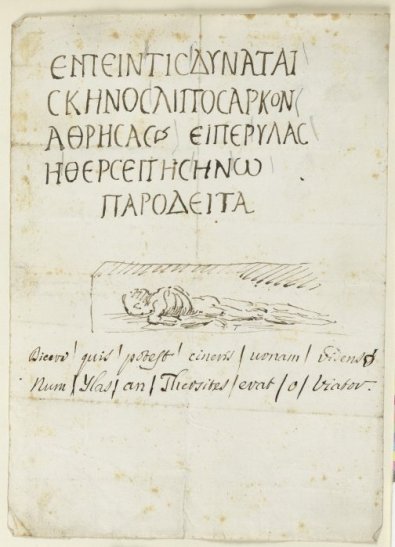
A famous funerary epigram now at the British Museum (IG XIV, 2131) and dating to the second century CE has a skeleton lying in repose. It reads:
“Who can say, passerby, looking on a fleshless corpse, whether it was Hylas (i.e., a beautiful youth) or Thersites (i.e., a bow-legged, ugly man)?”
I first learned about this inscription in a Greek epigraphy class at Duke University taught by Kent Rigsby. We were told to make a lemma of publications for each inscription, and I vividly remember tracking down the 1917 guide to inscriptions at the British Museum. Prof. Rigsby is emeritus from Duke now, but he still edits the open access journal Greek, Roman, and Byzantine Studies. In the spirit of open access, his epigraphy class had no central textbook and cost us almost nothing in terms of materials. It was largely based on reprints, open access materials, and good old fashioned leg work in the library. For new epigraphers today, there are still some splendid textbooks one can buy–for a price–but also a wealth of old epigraphy manuals, guides, and anthologies that still have value. They are largely available via the open access HathiTrust digital library.
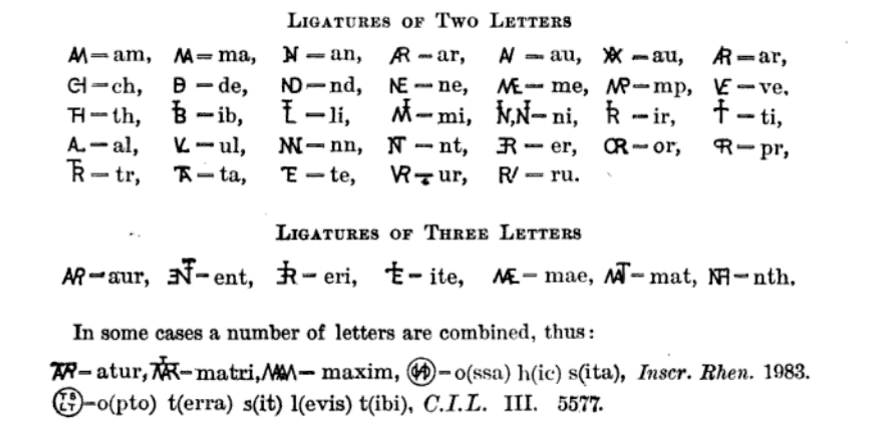
Epigraphic Editing Standards
(1969) Sterling Dow, “Conventions in Editing” [PDF via GRBS]
Early Christian Epigraphy
(1878) J. Spencer Northcote, Epitaphs of the Catacombs, or, Christian inscriptions in Rome during the first four centuries.
(1912) Orazio Marucchi, Christian Epigraphy.
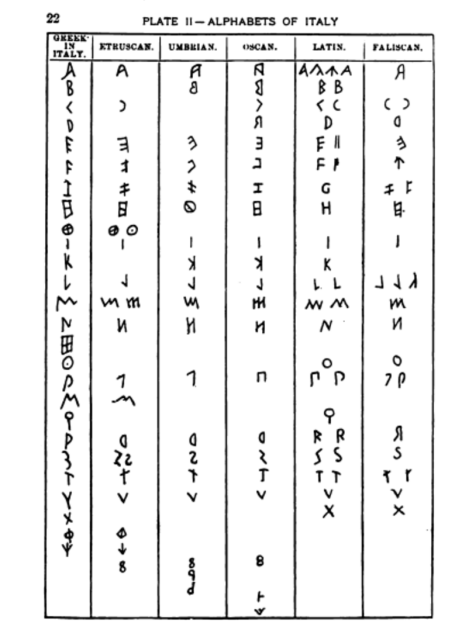
Latin Epigraphy
(1893) G. Rushforth, Latin Historical Inscriptions Illustrating the History of the Early Empire.
(1896): James C. Egbert, Introduction to the study of Latin inscriptions
(1898): René Cagnat, Cours d’épigraphie latine
(1915) Henry Bartlett Van Hoesen, Roman Cursive Writing
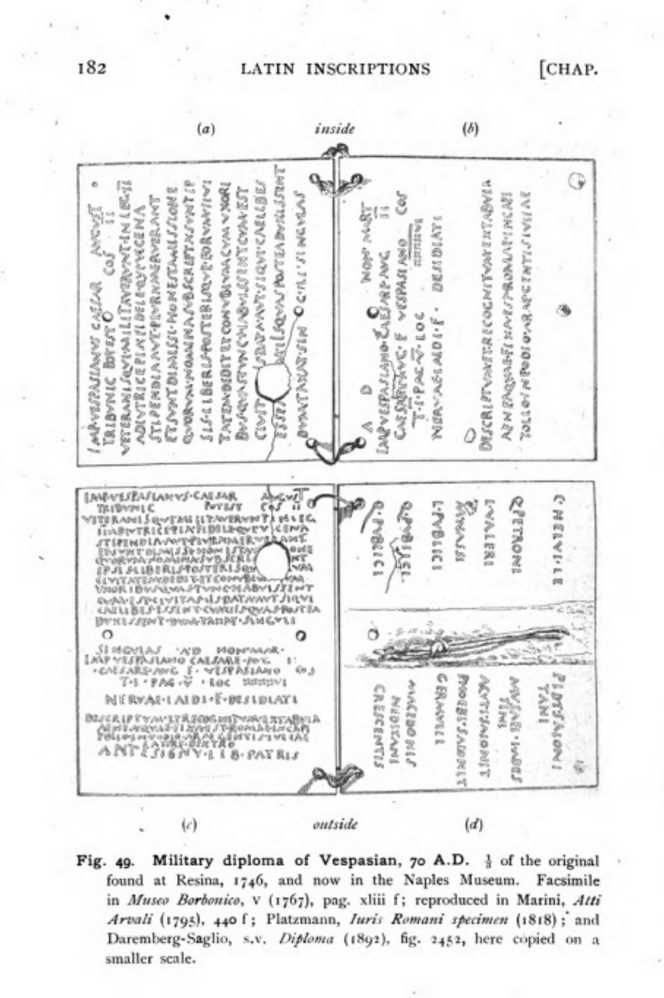
(1927): John Edwin Sandys, Latin Epigraphy: An Introduction to the Study of Latin Inscriptions
(1935) George N. Olcott, Thesaurus linguae latinae epigraphicae; A dictionary of the Latin inscriptions.
(1957) Joyce S. and Arthur E. Gordon, Contributions to the Paleography of Latin Inscriptions
Greek Epigraphy
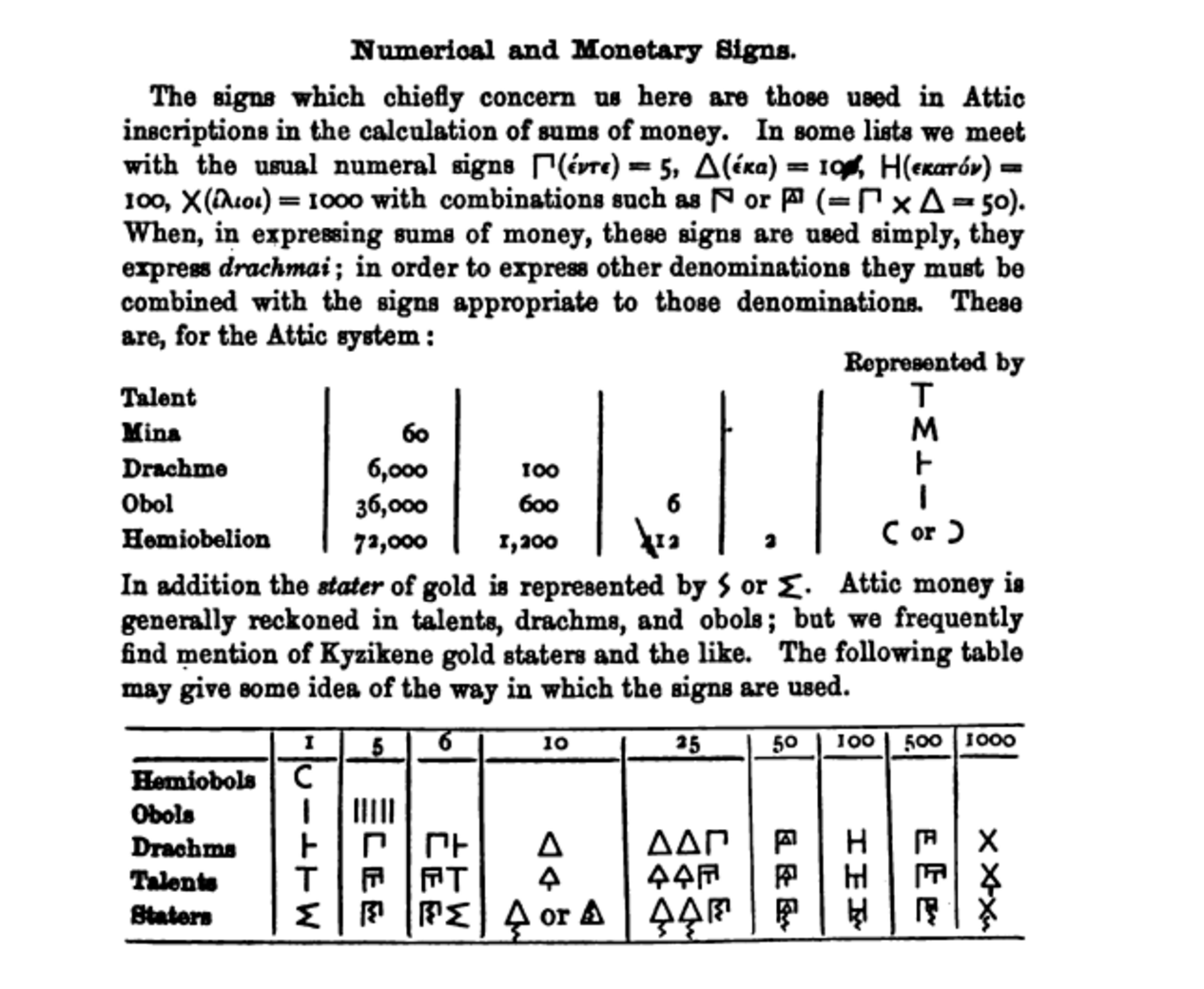
(1882) E.L. Hicks, A Manual of Greek Historical Inscriptions
(1898) Helen M. Searles, A Lexicographical Study of the Greek Inscriptions.
(1901) E.L. Hicks and G.F. Hill, A Manual of Greek Historical Inscriptions
(1910) Carl D. Buck, Introduction to the Study of the Greek dialects; Grammar, selected inscriptions, glossary.
(1900) Lucio Mariani, National Museum of Rome in the Baths of Diocletian.
Numismatics
(1899) George Francis Hill, A Handbook of Greek and Roman Coins
Open Access and Instructive Articles:
Rebecca Benefiel, “The Inscriptions of the Aqueducts of Rome: The Ancient Period,” The Waters of Rome 1 (2001).
Tom Elliott, “Epigrapher’s Bookshelf,” ASGLE.org.
Francisco Beltrán Lloris, “Latin Epigraphy: The main types of inscriptions,” in Ch. Bruun and J. Edmonson (eds.), The Oxford Handbook of Roman Epigraphy (Oxford — New York: 2015), 89-110.
Non-Open Access Lists with the Modern Epigraphy Handbooks Listed:
Sara Saba, Gil H. Renberg, “Greek Epigraphy”. In Oxford Bibliographies in Classics, http://www.oxfordbibliographies.com/view/document/obo-9780195389661/obo-9780195389661-0125.xml (accessed 10-Mar-2016).
Gil H. Renberg, Sara Saba, “Latin Epigraphy”. In Oxford Bibliographies in Classics, http://www.oxfordbibliographies.com/view/document/obo-9780195389661/obo-9780195389661-0017.xml (accessed 10-Mar-2016).
Other Non-Open Access Epigraphy Handbooks (Just go to the library!):
John Bodel (ed.), Epigraphic Evidence: Ancient History from Inscriptions (London and New York, 2001).
Alison E. Cooley (ed.), The Afterlife of Inscriptions: Reusing, Rediscovering, Reinventing and Revitalizing Ancient Inscriptions (London, 2000).
______ The Cambridge Manual of Latin Epigraphy (Cambridge: 2012).
Arthur E. Gordon, Illustrated Introduction to Latin Epigraphy (Berkeley: 1983).
Graham J. Oliver (ed.), The Epigraphy of Death: Studies in the History and Society of Greece and Rome (Liverpool: 2000).
B.H. McLean, An introduction to Greek Epigraphy of the Hellenistic and Roman Periods from Alexander the Great down to the Reign if Constantine (323 B.C.-A.D. 337). (Ann Arbor: 2002).


 Sarah E. Bond
Leave a reply to Sarah Bond / Liste de références en accès libre pour étudier les inscriptions grecques et latines – Arrête ton char Cancel reply